
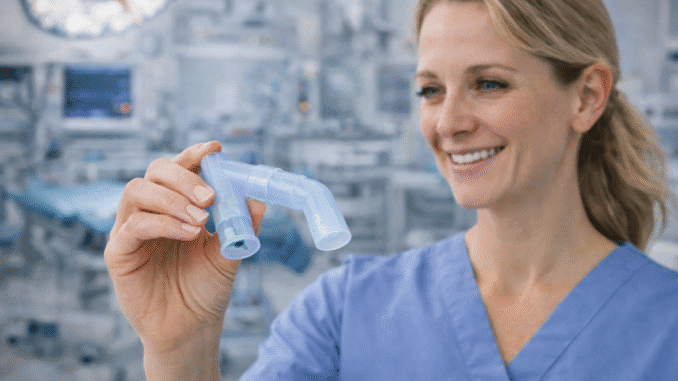
Every respiratory therapist has faced the same uncomfortable compromise.
A patient is acutely hypoxic, barely maintaining oxygen saturation on a non-rebreather mask. Then the order comes in for a nebulized bronchodilator. Suddenly, the setup that was keeping the patient stable becomes the problem. Oxygen delivery is interrupted, mask seals are broken, aerosol delivery becomes unpredictable, and the therapist is forced to improvise—again.
For decades, respiratory care has relied on workarounds in these situations. Nebulizers slipped under masks. Tubing cut and reassembled. Odd angles used just to make incompatible equipment work together. These practices persist not because they are best practice, but because there has never been a simple, standardized solution.
That persistent gap at the bedside is what led to the development of the Multi-functional Use Nebulizer Oxygen Delivery Adapter (MUNODA)—a device designed by a respiratory clinician to solve a problem respiratory therapists know all too well.
The Clinical Problem: Oxygen vs. Aerosol Delivery
Simultaneously delivering high concentrations of oxygen while administering aerosolized medication has always been challenging, particularly in patients with moderate to severe hypoxemia.
Common scenarios include:
- Patients on non-rebreather masks who require bronchodilator therapy
- Acute hypoxic respiratory failure in the emergency department or ICU
- Patients unable to tolerate a mouthpiece
- Situations where interrupting oxygen delivery is not clinically acceptable
In these cases, respiratory therapists are often forced to choose between maintaining oxygenation and delivering medication effectively—an unacceptable tradeoff in critically ill patients.
The Reality of Improvised Solutions
At the bedside, the most common workaround is slipping a nebulizer under the edge of a non-rebreather mask. While familiar, this approach introduces several problems:
- Loss of mask seal and dilution of delivered FiO₂
- Increased aerosol leakage into the environment
- Inconsistent and unpredictable medication delivery
- Greater medication waste
Bench testing confirms what many RTs already suspect: aerosol delivery becomes highly variable and often reduced when nebulizers are improvised under non-rebreather masks, with inhaled mass dropping significantly in some configurations. In some test runs, inhaled mass was reduced to nearly half of what is achieved with a proper interface.
Despite these limitations, these techniques remain common because historically there have been few alternatives.
Introducing MUNODA: A Bedside-Driven Solution
MUNODA was developed to eliminate the need for improvisation.
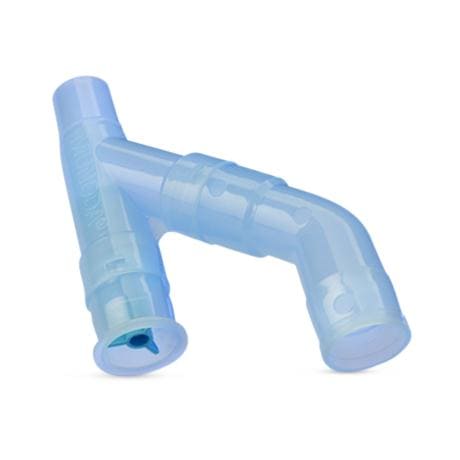
Rather than forcing incompatible devices to work together, MUNODA provides a single, purpose-built adapter that allows simultaneous high-concentration oxygen delivery and nebulized medication administration without breaking the oxygen interface.
At its core, MUNODA is designed to integrate seamlessly with standard disposable respiratory equipment, allowing therapists to maintain oxygen therapy while delivering aerosolized medications through a controlled, repeatable setup.
Key design features include:
- A multifunction adapter compatible with standard oxygen masks and oxygen tubing
- A vertical nebulizer orientation, promoting more consistent medication delivery compared with angled or horizontal workarounds
- The ability to deliver oxygen and aerosol therapy at the same time, rather than alternating between the two
- Elimination of the need to place a nebulizer cup between the patient’s face and the mask, reducing leaks and discomfort
- Flexibility across multiple configurations and care settings
Unlike improvised setups, MUNODA does not rely on cutting tubing, loosening mask seals, or tilting nebulizers at awkward angles. It standardizes a process that has historically depended on bedside creativity.
The device is commercially available through major medical suppliers, including Medline, making it accessible for routine clinical use rather than a niche workaround.
What the Evidence Shows
Bench testing comparing three common configurations—
- A standard aerosol mask
- A nebulizer slipped under a non-rebreather mask
- A non-rebreather mask interfaced with the MUNODA device
—demonstrated clear differences in aerosol delivery.
- Standard aerosol mask: Mean inhaled mass ≈ 13.0%
- Nebulizer slipped under NRB mask: Mean inhaled mass dropped to ≈ 10.6%, with wide variability
- NRB mask with MUNODA interface: Mean inhaled mass restored to ≈ 13.1%
These results show that using MUNODA restores aerosol delivery to levels comparable to a standard aerosol mask while allowing uninterrupted oxygen therapy.
The study concluded that slipping a nebulizer under the edge of a non-rebreather mask should be discontinued due to reduced and unpredictable aerosol delivery, and that an adapter-based solution provides a safer, more consistent alternative.
Clinician Perspectives From the Field
Respiratory therapists and physicians who have used MUNODA in clinical settings consistently describe similar benefits.
Clinicians have characterized the device as:
- A “force multiplier” in high-acuity and staffing-limited environments
- A “Swiss Army Knife” of respiratory interfaces due to its versatility
- A way to deliver inhaled medications without compromising FiO₂
Physicians and RT leaders have emphasized the value of maintaining oxygen delivery while administering aerosol therapy, particularly in acutely hypoxic patients where interruptions in oxygen flow can be clinically significant.
Where MUNODA Fits Best in Respiratory Care
MUNODA is particularly useful in scenarios where stability, efficiency, and consistency matter most:
- Acute hypoxemic respiratory failure
- Emergency departments and intensive care units
- Patients on non-rebreather masks requiring frequent aerosol therapy
- Tracheostomy patients using alternative oxygen interfaces
- High-volume or resource-limited clinical environments
By reducing setup time and eliminating the need for improvisation, the device allows respiratory therapists to focus on patient assessment and response rather than equipment workarounds.
Innovation Born From the Bedside
MUNODA was developed by Michael Golub, RRT, RN, a clinician with decades of experience across emergency, ICU, trauma, neonatal, pediatric, and veteran populations.
The device originated as a direct response to a recurring bedside problem: the inability to reliably deliver nebulized medications without compromising oxygen therapy. Early versions of the adapter were used, tested, and refined in real clinical environments, with feedback from practicing respiratory therapists and physicians.
Over time, those clinical insights led to further simplification and improvement of the original design. This evolution resulted in the Simplified and Improved Nebulizer Oxygen Delivery Adapter (SINODA)—a streamlined version of the original MUNODA concept, designed to enhance usability, consistency, and scalability while preserving the core clinical function.
Today, the SINODA device represents the next step in that bedside-driven innovation and is distributed by D&D Medical, Inc. through www.ddmed.com, expanding access to the technology for respiratory care departments nationwide.
Why Standardized Solutions Matter
Respiratory care continues to grow more complex, with higher patient acuity, increased staffing pressures, and greater expectations for safety and efficiency.
Standardized solutions like MUNODA:
- Reduce variability in care delivery
- Improve consistency in oxygen and aerosol administration
- Enhance patient safety
- Decrease cognitive and technical burden on clinicians
Moving away from improvisation toward intentional design benefits both patients and the respiratory professionals caring for them.
A Note on Device Evolution
As with many clinician-developed medical devices, MUNODA represents the foundational design that informed later improvements. The technology has since evolved into SINODA, reflecting refinements based on real-world clinical use. Both devices share the same core purpose: enabling simultaneous oxygen delivery and aerosol therapy without the need for improvised setups.
Editor’s Note
This article is intended for educational purposes and reflects published bench testing data and clinician experience.
